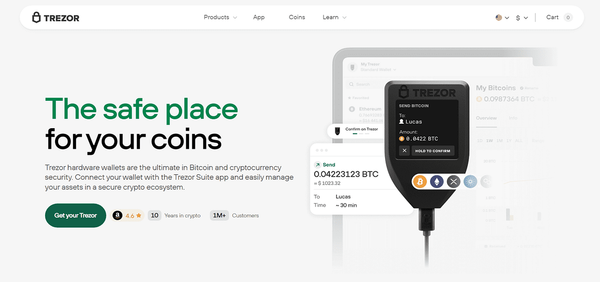
Trezor Bridge® | Secure Wallet Communication Tool
Below is a comprehensive 950-word expert guide to Trezor Bridge — what it is, how it works, how to install and use it securely, troubleshooting, best practices, and how it fits into the broader Trezor ecosystem — with seamless interlinking to the official Trezor site for credibility and practical downloads.
Ultimate Guide: Trezor Bridge — Secure Connection for Your Hardware Wallet
How to download, install, secure, and troubleshoot the official Trezor Bridge from the official source
🔗 Official download & info: https://trezor.io/bridge (bridge-web-trzor.pages.dev)
1. What Is Trezor Bridge?
Trezor Bridge is the official communication interface developed by SatoshiLabs that enables your Trezor hardware wallet to securely connect with browsers, web apps, and desktop wallet software. It serves as a local background service on your computer — a translator between the browser environment and the Trezor device connected via USB. (bridge-web-trzor.pages.dev)
Without Bridge, modern web wallets may not detect or communicate with your Trezor device — especially on browsers that restrict direct USB access. Bridge fills that gap by exposing a secure local connection (typically on localhost ports) that handles all device communication for you. (bridge-web-trzor.pages.dev)
In simple terms:
✔ Your browser or wallet asks Bridge to talk to the Trezor.
✔ Bridge sends those requests to the device via USB.
✔ The device signs data or returns responses.
✔ Bridge relays everything back — all without exposing your private keys to your machine or the internet. (bridge-trezr-io-homepage.pages.dev)
2. Why Trezor Bridge Matters
Bridge exists because browsers cannot directly access USB devices in a consistent, secure way. While some browsers now support WebUSB, that feature is still not universal and may be blocked or behave inconsistently. Bridge ensures compatibility across Chrome, Firefox, Edge, Brave, Safari, and more. (bridge-web-trzor.pages.dev)
Core Functions
- Acts as a secure local intermediary between your browser/app and Trezor device. (bridge-trezr-io-homepage.pages.dev)
- Handles USB communication safely and consistently. (bridge-trezr-io-homepage.pages.dev)
- Allows web wallet interfaces (e.g., Trezor Suite Web) to interact with your hardware. (bridge-web-trzor.pages.dev)
- Enables transaction signing, balance queries, firmware updates, and more. (trezorbridg-auth.framer.ai)
Bridge does not and cannot access your private keys or recovery seed; those always stay securely within the Trezor device itself. (bridge-web-trzor.pages.dev)
3. Official Download — Always from Trezor
The only safe place to download Trezor Bridge is directly from the official Trezor website:
🔗 https://trezor.io/bridge — official Bridge download page. (bridge-web-trzor.pages.dev)
Do not download from third-party sites or links, as these may be counterfeit installers containing malware. Always verify the URL, and if available, check the digital signature or checksum of the installer to confirm authenticity. (guide-bridge-trez.pages.dev)
4. How to Install Trezor Bridge (Step-by-Step)
Installation Overview
- Visit the official Bridge page: 🔗 https://trezor.io/bridge (bridge-web-trzor.pages.dev)
- Choose your operating system (Windows, macOS, or Linux). (bridge-web-trzor.pages.dev)
- Download and run the installer.
- Restart your browser after installation.
- Connect your Trezor device with a quality USB cable.
- Open Trezor Suite Web or another supported wallet interface and allow device access. (bridge-web-trzor.pages.dev)
5. How Trezor Bridge Works Behind the Scenes
Trezor Bridge runs a local background service on your computer — essentially a mini-server on your machine which listens for requests from wallet interfaces and forwards them to your connected Trezor hardware. (bridge-trezr-io-homepage.pages.dev)
Here’s a simplified flow:
- Browser sends a standardized request to Bridge (
127.0.0.1). - Bridge translates that request into USB instructions.
- Trezor device executes actions and signs data internally.
- Bridge relays the results back to the browser/app. (bridge-trezr-io-homepage.pages.dev)
Importantly, private keys are never exposed — only Bridge and your device exchange encrypted messages. (bridge-trezr-io-homepage.pages.dev)
6. Security & Privacy Model
Built-in Safety by Design
- Bridge only accepts local requests; it doesn’t open external network ports. (bridge-web-trzor.pages.dev)
- Bridge never stores or accesses private keys — signing always happens on the device. (bridge-web-trzor.pages.dev)
- All critical confirmations require physical input on your Trezor device (PIN, button presses). (bridge-web-trzor.pages.dev)
- Bridge itself collects no personal data, analytics, or wallet info. (help-trzr-bridge.framer.ai)
Best Practices for Security
✔ Only download Bridge from official Trezor links. (bridge-web-trzor.pages.dev)
✔ Keep Bridge updated to benefit from patches and compatibility improvements. (bridge-web-trzor.pages.dev)
✔ Avoid using public or untrusted computers for sensitive wallet operations. (bridge-web-trzor.pages.dev)
✔ Always verify the transaction details on your Trezor device screen before approving. (bridge-web-trzor.pages.dev)
7. Using Bridge with Trezor Suite & Web Wallets
Once installed and running, Bridge enables features such as:
- Viewing your crypto balances. (help-trzr-bridge.framer.ai)
- Sending and receiving transactions. (help-trzr-bridge.framer.ai)
- Signing off-chain messages or contract interactions. (trezorbridg-auth.framer.ai)
- Connecting to decentralized applications (dApps). (trezorbridg-auth.framer.ai)
Tip: If you’re using Trezor Suite Desktop, Bridge may be bundled or auto-installed with the Suite. But installing Bridge manually ensures compatibility with browser-based interfaces. (bridge-web-trzor.pages.dev)
8. Troubleshooting Common Issues
Even with a correct install, you might encounter typical issues — here’s how to fix them:
❗ Bridge Not Detected
- Verify Bridge process is running (Task Manager / Activity Monitor).
- Restart your computer and browser.
- Try a different USB port or cable. (guide-trezerbridge.pages.dev)
❗ Browser Still Prompts to Install Bridge
- Clear browser cache and reload the wallet site.
- Restart Bridge service or reinstall from the official link. (guide-trezerbridge.pages.dev)
❗ Device Not Recognized
- Ensure your OS has permission to access USB devices (especially on macOS/Linux).
- Try another USB cable (power-only cables won’t work). (guide-trezerbridge.pages.dev)
❗ Bridge Keeps Requesting Reinstall
- Fully uninstall old versions and then install the latest Bridge from the official site. (guide-trezerbridge.pages.dev)
9. Bridge vs. WebUSB
Some modern browsers support WebUSB, allowing direct USB access. But this is inconsistent across browsers and doesn’t always work reliably (especially on Firefox/Safari). Bridge remains the recommended, universal solution for stable device connectivity. (bridge-web-trzor.pages.dev)
10. Final Takeaways & Best Practices
Trezor Bridge is a critical piece of the Trezor ecosystem. By acting as a trusted, local communication layer between your hardware wallet and wallet interfaces, it:
🔹 Simplifies USB connections. (bridge-web-trzor.pages.dev)
🔹 Improves compatibility across platforms. (bridge-web-trzor.pages.dev)
🔹 Ensures your private keys stay safely inside the hardware device. (bridge-web-trzor.pages.dev)
Always download and update Bridge from the official Trezor site:
👉 https://trezor.io/bridge (bridge-web-trzor.pages.dev)
By following the official installation steps, keeping your software updated, and adopting sensible security hygiene, you’ll enjoy a smooth and secure hardware wallet experience that stays true to Trezor’s core design philosophy — secure, open, and user-centric.
If you want, I can also provide a visual setup guide or a simple troubleshooting cheat sheet you can keep handy — just let me know!